Walsall and Birmingham's highest rated dental practice - we guarantee the best quality dental care at great prices! Full range of dental care available - we can do everything under one roof!

A straight smile should fit your life, not make daily life harder. When considering clear aligners versus braces, the right choice comes down to more than appearance. Your bite, the amount of tooth movement needed, your routine and how reliably you can follow instructions all matter.
Clear aligners can be discreet and convenient. Fixed braces can offer precise control for more complex movements. Neither is automatically the better treatment. The best option is the one that can achieve a healthy, stable result while feeling realistic for you to manage.
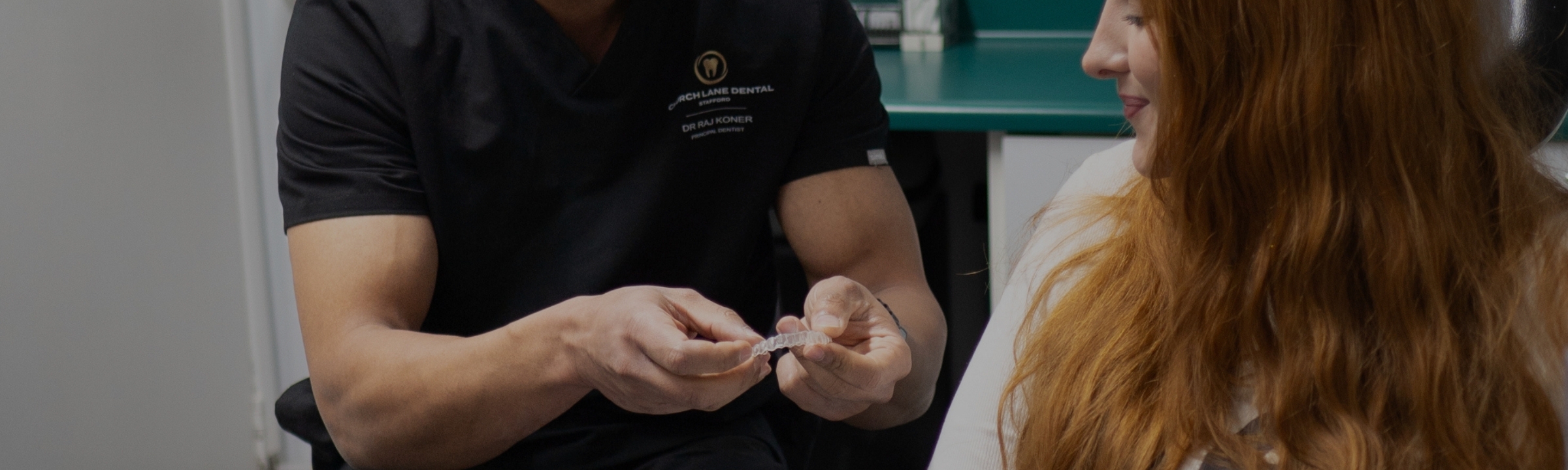
Clear aligners are custom-made, removable plastic trays that gradually guide teeth into a planned position. You wear each set for around 20 to 22 hours a day, changing to the next set as directed by your dentist or orthodontist. Because they are transparent and sit closely over the teeth, they are a popular option for adults who want orthodontic treatment to be less noticeable at work, social events or in photographs.
Braces are fixed to the teeth for the duration of treatment. Brackets and wires apply controlled pressure, with regular adjustments to keep teeth moving. Modern braces are far more refined than many people expect, and tooth-coloured options may be available for those who prefer a subtler look.
The biggest practical difference is responsibility. Braces work around the clock because they stay in place. Aligners only work when they are worn. If trays are regularly left out for meals, nights out or busy days, treatment can slow down and the final result may be compromised.
Clear aligners are often well suited to mild to moderate crowding, spacing, relapse after previous braces and many bite concerns. They can be particularly appealing if you want to remove your appliance to eat, brush and floss as normal. There are no brackets to work around when cleaning your teeth, which can make daily oral hygiene feel simpler.
They are also a comfortable choice for many patients. The plastic edges are smooth, and while each new aligner can create a feeling of pressure for a day or two, there are no wires that can rub against the lips or cheeks.
For patients with busy professional or family lives, the discretion is a genuine benefit. You can take aligners out briefly for an important occasion, then put them straight back in. That flexibility must be used carefully, though. Aligners are not designed to spend hours in a napkin on a restaurant table or in a pocket during the day. Lost trays are one of the most common avoidable delays in treatment.
Clear aligners may be less suitable if you know you would struggle to wear them consistently. They can also be limited for certain complex tooth movements, significant bite discrepancies or cases where teeth need very precise vertical movement. Some patients still benefit from small tooth-coloured attachments on their teeth, which give the aligners the grip needed to move teeth accurately. They are discreet, but not completely invisible up close.
Fixed braces remain one of the most reliable ways to correct complex orthodontic problems. Because they are bonded to the teeth, they give the clinician continuous control and do not depend on the patient remembering to put them back in.
They may be recommended where there is severe crowding, teeth that need rotating or lifting into position, a pronounced overbite, underbite or crossbite, or a treatment plan involving substantial bite correction. Braces can also be a sensible choice for younger teenagers who may find the discipline of wearing removable aligners difficult.
The trade-off is visibility and cleaning. Metal braces are noticeable, although many patients become comfortable with them surprisingly quickly. Food can catch around brackets and wires, so brushing needs to be more thorough and may take longer. You will also need to avoid very hard, sticky or chewy foods that could damage the appliance.
Occasional maintenance is part of the process. A wire can feel sharp, or a bracket may come loose after biting something hard. These problems are usually manageable, but it is reassuring to choose a practice that can offer prompt clinical support if you need it.
Both treatments create pressure because tooth movement requires pressure. With braces, this is often most noticeable after an adjustment. With aligners, it tends to happen when moving to a new tray. In either case, any discomfort is usually temporary and should be manageable with the advice provided by your dental team.
Eating is where many adults notice the clearest contrast. With aligners, you remove the trays before meals and drinks other than water, then brush before replacing them whenever possible. With braces, the appliance stays in place, but you may need to adapt what you eat. Crunchy apples, crusty bread and some sweets can need extra care.
There is no wrong preference here. Some people value removing aligners for meals; others prefer braces because there is nothing to remember, clean separately or potentially misplace. The best treatment is not the most fashionable one. It is the one you can commit to from the first appointment through to retainer wear.
Treatment time varies significantly. Straightforward cosmetic alignment may take several months, while comprehensive orthodontic treatment can take 12 to 24 months or longer. The complexity of your bite, the health of your teeth and gums, your chosen appliance and your cooperation all affect the timeline.
Aligner treatment can be very efficient when trays are worn as prescribed and review appointments are kept. Braces may be the more predictable route in difficult cases because they cannot be removed. Neither option should be selected purely because it appears quicker on social media. A careful assessment and a personalised treatment plan matter far more than a generic promise about speed.
At Church Lane Dental, orthodontic planning can be coordinated alongside hygiene care, restorative treatment and cosmetic dentistry under one roof. This matters if you have gum concerns, old fillings, missing teeth or other issues that need attention before or during tooth straightening.
The cost of braces or clear aligners depends on the complexity of your case, the type of appliance, the number of reviews needed and what is included in the plan. Ask for clear written information about scans, attachments, refinement aligners, retainers and follow-up care before committing.
A lower starting price is not always the lower overall cost if important stages are excluded. Equally, a more complex plan may be worthwhile if it corrects a bite that would otherwise place uneven pressure on teeth or make cleaning more difficult. If spreading the cost would help, ask whether finance options are available and whether you are eligible before treatment begins.
Whether you choose braces or aligners, teeth can move again after active treatment. Retainers protect the time, investment and effort you have put into your new smile. They may be removable, fixed behind the front teeth, or a combination of both.
Retainer wear is not an optional finishing touch. It is the stage that helps maintain your result for the long term. Your dentist will advise how often to wear them, and that advice can change over time. Keep retainers safe, clean them correctly and contact the practice promptly if one breaks, no longer fits or is lost.
A friend may have loved their clear aligners, while a colleague may swear by braces. Their experience is useful, but their bite is not yours. The right decision follows a proper examination, digital planning where appropriate, and an honest conversation about your goals, budget and routine.
If you want a discreet option and can wear trays consistently, clear aligners may be an excellent fit. If your case is more complex or you would rather have treatment working continuously without relying on daily wear, braces may offer the confidence and control you need. Book a consultation, bring your questions, and choose the route that gives your smile the strongest foundation for the years ahead.
Back to blog
Quickly match your needs with the right dental treatment using our simple treatment finder.
Have questions or ready to book? Reach out, and our team will guide you every step of the way.


Follow us on Instagram for real patient transformations, behind the scenes updates and the latest offers. It’s the easiest way to stay connected and inspired on your smile journey.
EXPLORE