Walsall and Birmingham's highest rated dental practice - we guarantee the best quality dental care at great prices! Full range of dental care available - we can do everything under one roof!

A dental implant is designed to give you back more than a missing tooth. It can restore the confidence to smile in photographs, eat comfortably with family and speak without worrying about a denture moving. Naturally, one of the first questions patients ask is about dental implant longevity: how long will it really last?
The honest answer is that implants can last for decades, and many last for life. However, no clinician should promise that every implant will perform identically forever. Your long-term result depends on careful assessment before treatment, precise placement, the health of your gums and bone, and the habits that follow once your new tooth is in place.
A dental implant has several parts, and they do not all have the same lifespan. The implant itself is a small titanium post placed in the jawbone. Once it has healed and bonded with the bone, it acts like the root of a natural tooth. With good oral health and regular professional care, this part can remain stable for many years, often for decades.
The visible tooth on top – usually a crown – is exposed to the daily forces of biting and chewing. Like a natural tooth or any high-quality restoration, it may eventually need maintenance or replacement. This is not necessarily a sign that the implant has failed. In many cases, the implant remains healthy while the crown is renewed after years of use.
For patients replacing several teeth or securing a full arch of teeth, longevity also depends on the design of the bridge and how forces are shared across the implants. A personalised plan matters. There is no one-size-fits-all implant treatment, particularly where bone loss, gum disease or grinding are involved.
The strongest implant results begin long before the procedure. A detailed consultation allows your dentist to assess the missing-tooth area, surrounding teeth, bite, gum condition and bone volume. Digital imaging and 3D planning can help identify the safest, most predictable position for an implant and avoid surprises during treatment.
Dental implants rely on healthy bone and gums. When a tooth has been missing for some time, the jawbone can shrink because it is no longer receiving the stimulation of a tooth root. Some patients may need bone grafting or sinus treatment before an implant can be placed safely and securely. This can lengthen the treatment journey, but it may create a better foundation for a long-lasting result.
Gum health is equally important. Bleeding gums, persistent inflammation or untreated periodontal disease can affect the tissues around an implant. Implants do not get decay, but they can develop inflammation around the gums and bone. This is known as peri-implant disease, and it needs early professional attention.
Smoking and tobacco use can slow healing and increase the risk of complications around implants. It does not always mean implant treatment is impossible, but it should be discussed openly before treatment begins. Reducing or stopping smoking gives your mouth the best opportunity to heal and helps protect the investment you are making in your smile.
If you wake with jaw tension, wear through teeth, crack fillings or have been told you grind your teeth, your bite needs careful assessment. Repeated clenching can put substantial pressure on an implant crown, bridge or surrounding teeth.
A custom night guard may be recommended to protect your restoration while you sleep. It is a simple step that can help reduce wear and avoid damage, especially for patients with implant-supported teeth at the back of the mouth where chewing forces are highest.
Conditions such as diabetes do not automatically rule out implants, but they must be well managed. Certain medications, previous radiotherapy to the jaw area and conditions affecting healing can also influence whether implants are suitable or when treatment should take place. A responsible implant consultation considers your full medical history, not just the gap in your smile.
An implant may feel and look like a natural tooth, but it still needs dedicated care. Plaque can collect where the crown meets the gum, and it must be removed consistently. Brush twice a day with a fluoride toothpaste and use the cleaning aids recommended for your specific restoration, such as interdental brushes, floss or a water flosser.
The right technique matters as much as the product. Implant bridges, particularly those replacing several teeth, can have areas beneath the replacement teeth that need special attention. Your dentist or hygienist can show you exactly how to clean around your implant rather than leaving you to guess.
Regular hygiene appointments and implant reviews are part of long-term protection, not an optional extra once treatment is complete. These visits allow the team to check the gum tissues, monitor the bite, remove hardened deposits and spot early changes before they become more complex or costly to treat.
It also pays to avoid using your implant tooth as a tool. Opening packaging, biting nails, chewing ice and cracking hard sweets can chip porcelain or place unnecessary stress on the crown. If you play contact sport, a well-fitting mouthguard is a sensible safeguard.
Implant complications are often more manageable when they are dealt with early. Contact your dental team if you notice bleeding when brushing, swelling, tenderness, a bad taste, pus, recession around the implant, a loose-feeling crown or changes in how your teeth meet together.
A loose crown does not always mean the implant itself is loose. Sometimes a retaining screw or cemented restoration needs attention. Even so, it should never be ignored or repaired at home. Continuing to bite on a loose restoration can cause further damage and make the solution more involved.
Sudden pain, facial swelling or trauma to the mouth needs urgent assessment. For patients in Walsall and the wider West Midlands, Church Lane Dental can provide responsive care when an unexpected dental problem cannot wait for a routine appointment.
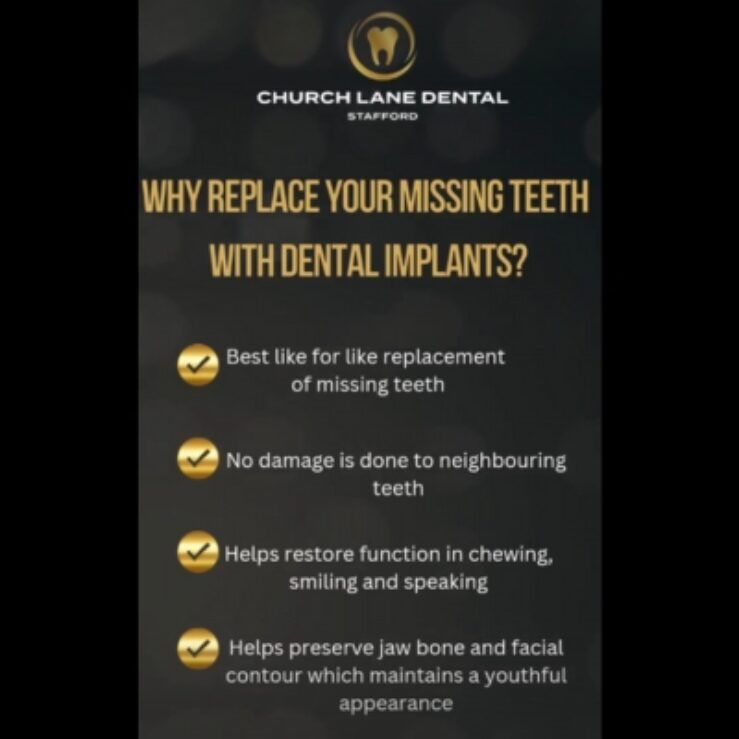
Yes, for many people, because longevity is not the only benefit. A well-planned dental implant can help preserve bone in the area of a missing tooth, avoid trimming healthy neighbouring teeth for a conventional bridge and provide fixed stability that removable dentures may not offer. It can also be designed to match the shape, shade and character of your natural smile.
There are trade-offs. Implant treatment involves a surgical procedure, healing time and a greater upfront cost than some alternatives. A bridge or denture may be the right option in certain circumstances, particularly where health, time, budget or bone availability changes the balance. The best choice is the one that is clinically appropriate and works for your life, not simply the treatment that sounds most permanent.
The most durable implant treatment is built on realistic planning, not rushed promises. Ask how your gums and bone will be assessed, what type of restoration is being proposed, how your bite will be managed and what ongoing reviews will involve. You should also understand the likely maintenance costs over time, including the possibility that the crown may one day need replacing.
If you are considering an implant, start with a consultation that looks beyond the missing tooth. A carefully planned result, combined with daily cleaning and regular professional care, gives your new smile the strongest possible chance to serve you comfortably for many years.
Back to blog
Quickly match your needs with the right dental treatment using our simple treatment finder.
Have questions or ready to book? Reach out, and our team will guide you every step of the way.


Follow us on Instagram for real patient transformations, behind the scenes updates and the latest offers. It’s the easiest way to stay connected and inspired on your smile journey.
EXPLORE